Mammo Screening Saves Lives – Even in Late-Stage Cancer

A new study confirms that not only does breast cancer screening save lives, but it also improves survival in women with late-stage disease. Researchers found that women with stage IV breast cancer had a survival rate over three times higher if their disease was detected with screening, thanks largely to its role in driving treatment.

The “Mammography Wars” over breast cancer screening’s effectiveness raged from the 1980s to the 2010s, but eventually were decided in mammography’s favor. 

  • Multiple research studies have demonstrated that the combination of early detection and more effective treatments improve breast cancer survival. The USPSTF’s 2023 shift back to recommending that screening start at 40 settled the issue. 

But pockets of anti-screening resistance remain, with screening skeptics publishing several studies since the USPSTF change questioning the value not only of mammography but also other cancer screening tests.

  • So it’s more important than ever to demonstrate cancer screening’s value.

The new study in the Journal of the National Cancer Institute does just that by analyzing screening’s impact on survival rates in women diagnosed with stage IV disease who had been invited to Denmark’s national breast screening program (not all women completed mammography despite getting invited).

  • In all, 32.8k women with breast cancer were included, of whom 8% presented with stage III or stage IV cancer. 

The researchers found that for women with stage IV breast cancer…

  • Five-year survival was over 2X higher for women with screen-detected cancer versus women who were never screened (75% vs. 32%).
  • Ten-year survival was over 3X higher (62% vs. 17%).
  • Women with later-stage disease detected by screening had survival rates over five years comparable to women with disease one stage lower who were never screened.
  • Survival rates were strongly influenced by treatment type, with surgical treatment showing the longest median survival versus non-surgical treatment and no treatment (6, 2, and 0.1 years, respectively).

The big difference in survival was driven by the fact that women with screen-detected cancers were far more likely to get surgical treatment, and to subsequently have better 10-year survival rates than those treated without surgery (60% vs. 8%).

The Takeaway

The new study once again proves the value of screening mammography, but it goes beyond just showing that screening causes a stage shift to earlier diagnosis. Even in women with late-stage disease, screening is driving more effective treatment that is proving invaluable in saving women’s lives.

Simpler Radiology Reports from LLMs

Can large language model AI algorithms write simpler radiology reports for patients than clinicians? A study published in European Radiology found that LLM-produced reports were more readable, but there are areas of concern that will require fine-tuning.

Patients are taking greater interest in managing their own healthcare, requesting direct access to medical information like images and reports.

  • That’s a good thing, but it creates challenges for healthcare professionals more used to communicating with other providers.

Taking the time to draft a report just for patients is a non-starter for many radiology professionals in a time of workforce shortages.

  • But this could be an excellent use case for AI, especially the LLMs that have sprung up over the past few years. 

So researchers from Germany tested three LLMs to draft patient-friendly versions of 60 radiology reports from X-ray, CT, MRI, and ultrasound modalities. 

  • The LLMs included the ubiquitous ChatGPT-4o, as well as two open-source LLMs (Llama-3-70B and Mixtral-8x22B) that had been deployed on-premises within their hospitals.

The authors wanted to know not only how well the LLMs performed in drafting patient reports, but also whether there were differences between the black-box ChatGPT 4o and the two open-source LLMs.

  • The LLMs were instructed to generate layperson summaries at the eighth-grade reading level, preserving key clinical information. 

In comparing original radiology reports to LLM-produced summaries, researchers found…

  • Original reports had much lower ease-of-reading scores on the Flesch readability scale (17 vs. 44-46).
  • Original reports were judged much less understandable on a five-point scale (1.5 vs. 4.1-4.4). 
  • The two open-source LLMs had higher rates of critical errors that could lead to patient harm (8.3%-10%), while ChatGPT 4o had no critical errors. 
  • Original reports had shorter total reading time versus LLM versions (15 vs. 64-73 seconds).
  • There was no difference in understandability based on modality.

The findings on critical errors are particularly concerning. 

  • Clinicians may see on-premises open-source LLMs as having patient privacy advantages over cloud-based ChatGPT 4o, but such models may require more clinical oversight to avoid patient harm. 

The Takeaway

The new study on LLM-generated patient radiology summaries is encouraging, pointing to a future in which a cumbersome task could be offloaded to generative AI algorithms. But much work remains to ensure patient safety and privacy before this can happen.

VC Funding Bounces Back in 2025

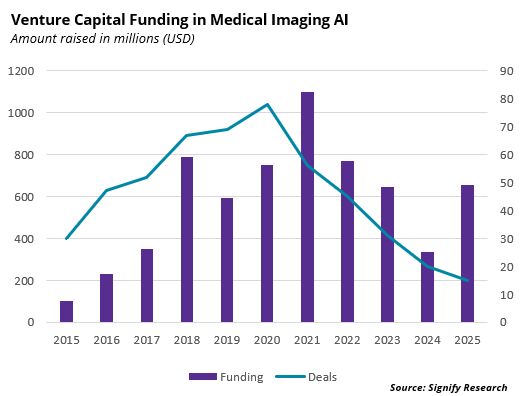
After a long slide, venture capital funding for medical imaging AI companies bounced back in 2025. That’s according to the latest report from market intelligence firm Signify Research. 

VC funding of AI startups has declined steadily since 2020, when cheap money fueled by low pandemic-era interest rates spurred a boom in both the total dollar value of investments as well as the number of funding rounds getting done.

  • Previous Signify reports documented the trend well, with the number of funding rounds peaking at nearly 80 in 2020 and total funding crossing the $1B mark in 2021. But by 2024, funding rounds had fallen by 64% and their dollar value by 70%.

But the numbers for 2025 show a turnaround starting, at least with respect to dollar value…

  • Total funding more than doubled compared to the year before ($709M vs. $336M).
  • While the number of funding rounds fell 17% (19 vs. 23).
  • But the size of the average funding round grew 112% ($39M vs. $19M).

In analyzing the numbers, Signify found that while funding momentum is coming back, investors are being more selective. 

  • Capital is concentrating in companies that have a clear enterprise fit, a strong integration pathway, and the ability to operate within platform and imaging IT ecosystems.

Funding rounds of note in 2025 included…

  • Aidoc’s haul of $150M.
  • An Ultromics funding that put the company in Signify’s coveted $100M club.
  • Cerebriu gaining over $10M in a Series A round.
  • a2z pulling in $4.5M in seed funding for its multi-triage platform. 

The report addresses turbulence in the AI platform sector, which saw significant disruption in 2025 after Bayer’s withdrawal from the market. 

  • Platform companies will need to move beyond AI orchestration and show they can actively improve radiology workflows and deliver better clinical decisions and measurable impact. 

The Takeaway

The 2025 bounceback in VC funding for AI firms is welcome news that the correction that followed the sugar high of 2020/2021 may have worked its way through the system. AI investments in 2026 are likely to be smarter and more focused, and in companies that have demonstrated their value in helping radiologists work more efficiently. 

CT Supports Better Stroke Care

When it comes to stroke, time is brain. And the faster stroke patients can be diagnosed, the sooner brain-saving treatment can start. Researchers in Germany found that sending stroke patients to hospitals equipped with CT scanners and telemedicine connections might be more effective than transferring them directly to specialized stroke centers.

CT is critical for assessing stroke patients and determining whether they should receive intravenous thrombolysis with clot-busting drugs or endovascular thrombectomy with catheter-guided devices.

  • It’s particularly important that patients be treated within the “golden hour” of stroke symptom onset, as every 10 minutes of delay results in eight weeks of healthy life lost.

Specialized stroke centers outfitted with dedicated equipment have sprung up to deliver better care, but they’re not that common and patient transfers can take extra time.

  • Far more common are hospitals with CT scanners, giving rise to the suggestion of a hub-and-spoke model in which patients are sent first to a hospital equipped with CT and telemedicine for diagnosis and initial thrombolysis (the spoke), and then on to a specialized center (the hub) if necessary.

This approach is tested in a new study in The Lancet Regional Health – Europe, in which German researchers performed a modeling study to see how hub-and-spoke stroke treatment compared to direct transfer to specialized stroke centers.

  • They developed a map of CT-equipped hospitals and dedicated stroke centers in Germany, and calculated minimum travel and time benefits in 10-minute thresholds.

The researchers found that of Germany’s population…

  • 76% were within 15 minutes of at least one hospital with on-site CT, and 99% were within 30 minutes.
  • 51% were within 15 minutes of a stroke-ready hospital (hospitals that treat a set number of stroke patients but aren’t yet certified), and 90% within 30 minutes.
  • Only 46% lived within 15 minutes of a stroke-certified hospital, a figure that grew to 85% within 30 minutes.
  • 36% would reach a CT-equipped hospital at least 10 minutes faster than a certified stroke unit.

Not surprisingly, there were geographic differences in accessibility, with urban areas having good access to specialized stroke centers but rural and underserved areas less so (90% vs. 55%).

  • So the hub-and-spoke model might be better suited for rural areas while the direct transfer approach would still work for urban zones. 

The Takeaway

While this study was conducted in Germany, its lessons could be applied to any country that has to juggle healthcare resources with clinical demands. The question is how much the findings might be impacted by new technologies like mobile stroke units and AI-based stroke assessment. 

Residency Push Skips Radiology

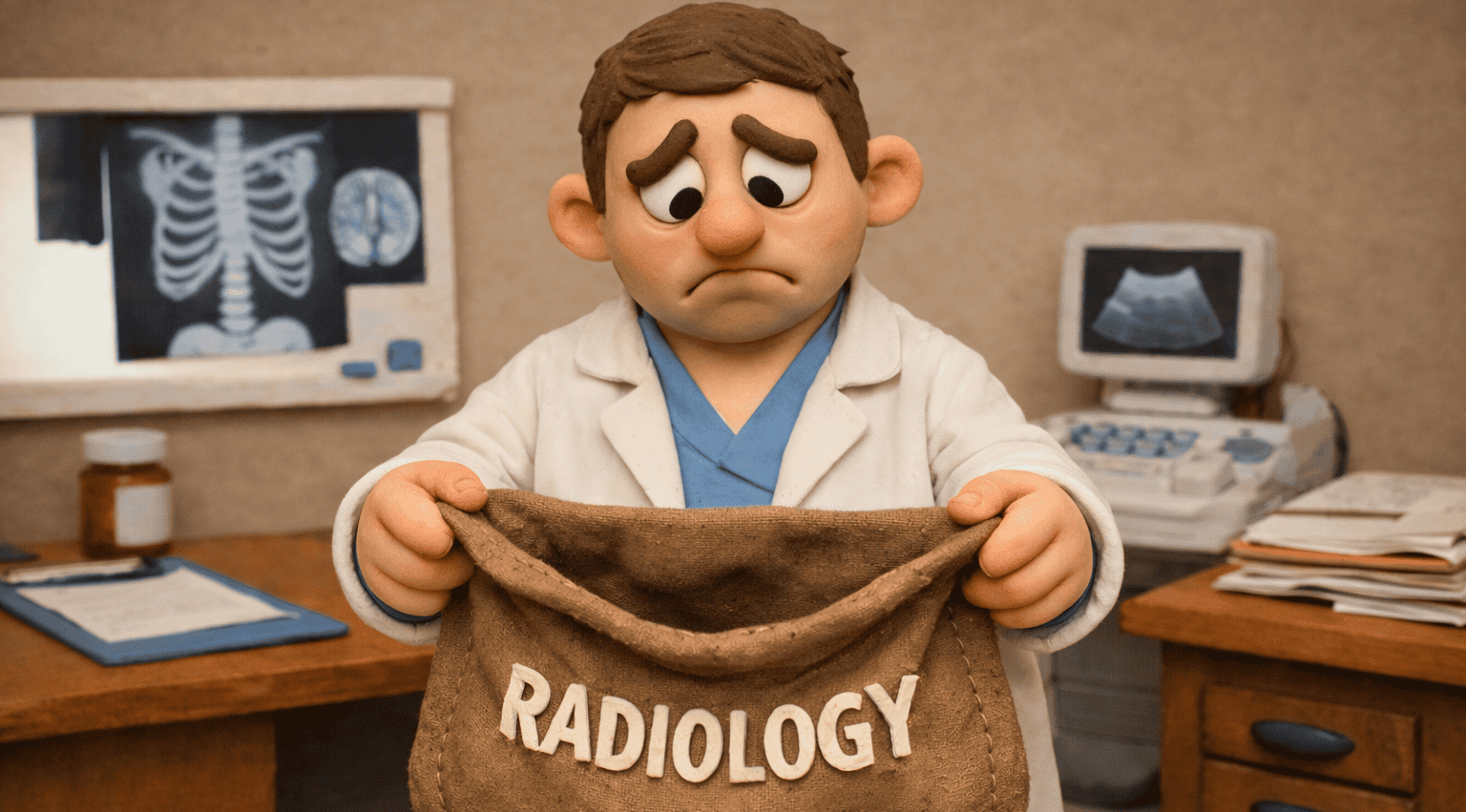
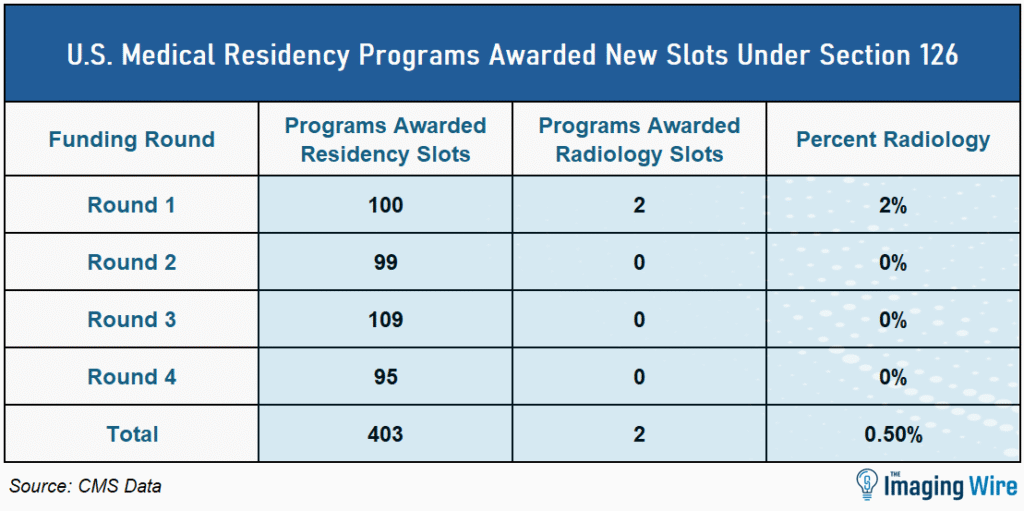
A federal push to alleviate the U.S. physician shortage by adding more resident training slots appears to have skipped radiology. Of the more than 400 residency programs awarded funding so far, only two diagnostic radiology programs got funds. 

The ongoing doctor shortage has become a major issue in U.S. healthcare, as physicians face rising patient volume from an aging population with a workforce that’s largely stagnant. 

  • Physicians are already experiencing high burnout rates, and the Association of American Medical Colleges predicts there will be a shortage of as many as 86k doctors by 2036.

Part of the problem is that physician training is tightly controlled in the U.S. Residency programs get most of their funding from Medicare, and there’s been a cap on the number of slots Medicare can fund since 1997.

  • So it takes an act of Congress – literally – to get more money to add residency slots.

That’s actually happened in recent years, with federal budget bills in 2021 and 2023 specifically allocating more money for Direct Graduate Medical Education to help train more residents through what’s commonly known as Section 126.

  • In all, the legislation is funding 1.2k new residency slots, with the positions released through five rounds of funding.

But the fourth round of new resident positions under Section 126, announced in December, skipped diagnostic radiology entirely. 

  • A list of the new positions by Becker’s Hospital Review found no diagnostic radiology slots added to U.S. resident training programs, while 20 interventional radiology positions were added. 

And over the course of the Section 126 program, only 0.5% of residency programs getting funding were diagnostic radiology.

It’s unclear how the omission occurred. Hospitals with resident training programs have to apply for the additional funding, and it’s possible that diagnostic radiology’s low (or nonexistent) numbers simply reflect fewer DR applications.

  • But it’s widely known that the federal government has prioritized training primary care physicians, as well as hospitals in rural areas. Indeed, being in a rural area or health professional shortage area are two of four ways for residency programs to qualify for Section 126 funding.

Legislation currently languishing in Congress – the Resident Physician Shortage Reduction Act of 2025 – would add 14k residency positions over the next seven years. 

  • But even such a large expansion in residency training won’t help medical imaging much if diagnostic radiology continues to get passed over when allocating new positions (the application period for the fifth and final round just opened). 

The Takeaway

The fact that diagnostic radiology is getting skipped over in Section 126 residency funding shows that there’s no cavalry coming over the hill to help the specialty deal with its workforce shortage. Help will have to come from somewhere else, be it AI, teleradiology, or some other kind of technology.

More Positive News on Mammo AI from MASAI

The latest results from the landmark MASAI study of AI for mammography screening show a favorable trend toward reducing the rate of interval cancers, or breast cancers that appear between screening rounds. The new findings – published Friday in The Lancet – also confirm mammography AI’s sharp workload reduction and trend toward higher sensitivity. 

MASAI is a large randomized controlled trial conducted in Sweden that examined the impact of ScreenPoint Medical’s Transpara AI algorithm on breast screening.

  • It’s an important issue, because mammography is one of the radiology segments where AI can provide the most help by reducing radiologist workload while improving cancer detection.

Previous MASAI studies demonstrated that AI can reduce radiologist workload by 44% and improve cancer detection rates by 28%.

  • The findings suggest that AI could eliminate the need for double-reading of most mammograms, a practice that’s common in European screening programs.

The new findings focus specifically on interval cancers, cancers that are missed in one screening round, only to be found later. 

  • Like other MASAI studies, the patient population consisted of 106k women screened with mammography and Transpara AI in Sweden’s national program in 2021 and 2022. 

Results indicated that AI-aided mammography…

  • Cut interval cancer rates by 12% per 1k women (1.55 vs. 1.76).
  • Reduced invasive interval cancers by 16% (75 vs. 89) with 27% fewer cancers of aggressive subtypes (43 vs. 59).
  • Detected 9% more cancers at screening (81% vs. 74%) with comparable specificity (99% for both) and recall rates (1.5% vs. 1.4%).

The researchers acknowledged that the study was not powered to show a statistically significant difference in the interval cancer rate. 

  • But its positive trend indicates that AI can be used to replace double-reading without negative consequences for patients – resulting in a sharp workload reduction for radiologists. 

The Takeaway

Results from the MASAI study on mammography AI just keep on getting better. Last week’s findings indicate that there’s really no reason for European breast screening programs to not dive in and replace their second readers with AI for the majority of exams.

Lung Cancer in Non-Smokers Creates Questions

Behind the growing enthusiasm for CT lung cancer screening is a nagging question – should we be screening people who have never smoked too? It’s a dilemma that’s addressed in a new paper in Radiology that offers some insight.

CT lung screening is the only major cancer screening test that’s exclusively targeted at high-risk individuals, essentially people who have smoked long enough to meet inclusion criteria.

  • Other cancer screening exams – for breast, colorectal, and cervical cancer– are offered to broader segments of the population, with age typically the only qualifying factor.

But lung cancer still occurs in people who have never smoked, who account for 10-25% of lung cancer cases, the fifth most common cause of cancer mortality globally.

  • For example, East Asian women, even those who have never smoked, seem to have higher lung cancer incidence rates, indicating a genetic risk factor that’s still not fully understood. 

The new Radiology paper reviews the state of knowledge regarding lung cancer in people who have never smoked, and examines whether the phenomenon’s prevalence calls for a rethinking of how CT lung cancer screening is offered. 

The authors explain that lung cancer in non-smokers…

  • Can be caused by environmental factors like workplace exposure, air pollution, genetic susceptibility, and exposure to second-hand smoke (20-26% higher risk for spousal exposure).  
  • Has a different carcinogenesis mechanism than lung cancer in smokers, and tends to be more slow-growing.
  • Has different characteristics than cancer in smokers, being overwhelmingly dominated by adenocarcinoma (90%). 

So with this knowledge in hand, should current U.S. and European lung cancer screening guidelines be changed? 

  • Japan is already conducting mass lung screening regardless of smoking history, while China’s guidelines include people who have never smoked but have other risk factors like occupational exposure.

But broader screening could lead to higher rates of overdiagnosis and overtreatment, and early studies from Asia have found screening had little effect on overall mortality in non-smokers. 

  • That led the Radiology authors to conclude that, at present, it’s probably not advisable to begin screening people who have never smoked until more research is conducted.

The Takeaway

The new paper on CT lung cancer screening of people who have never smoked is more than just an interesting thought experiment. It surfaces an issue that’s been percolating as risk-based lung screening gains momentum, and that ultimately may require a completely different approach to lung screening from what’s been used to date.

Doctors Adopt ‘Shadow AI’ for Efficiency Gains

Doctors under pressure to work more efficiently are looking for help from “shadow AI” – artificial intelligence applications adopted outside a formal hospital approval process. A new survey of U.S. healthcare personnel found that many administrators have encountered unauthorized AI tools in their organizations, including some used for direct patient care. 

U.S. healthcare providers are struggling under rising patient volumes in the midst of an ongoing workforce shortage, a situation that’s leading to burnout among clinicians. 

  • AI is often touted as a possible solution by enabling providers to do more with less, but the jury is still out on whether this works in the real world. 

The new survey was conducted by Wolters Kluwer Health to assess usage of what the report described as “shadow AI,” or AI that’s adopted without proper hospital authorization processes. 

  • Shadow AI introduces risk to data, security, and privacy, and providers should better understand the need for an enterprise approach to AI with appropriate controls.

It’s worth noting that the report’s use of the term “authorization” applies primarily to an institution’s internal approval and governance processes for AI rather than formal FDA regulatory authorization. 

  • AI algorithms that aren’t used for direct patient care don’t require FDA authorization, as the agency pointed out in a guidance just a few weeks ago. 

Researchers surveyed 518 health professionals, finding…

  • 41% were aware of colleagues using unauthorized AI tools.
  • 17% said they had personally used an unauthorized tool.
  • 10% said they had used an unauthorized AI tool for direct patient care.

While the report’s recommendation for stronger AI governance is valid, there could be a competitive subtext to the findings. Wolters Kluwer offers healthcare clinical decision support solutions, and the company is currently locked in a fierce battle with OpenEvidence for dominance in the CDS space.

  • OpenEvidence’s CDS solution is wildly popular with clinicians, many of whom install and consult with the software on their own, outside an enterprise-level governance – exactly the kind of “unauthorized” model the new report criticizes.

The Takeaway

The Wolters Kluwer report could be shedding light on a concerning new trend, or it could represent an effort by an established player to shut out a competitive threat. Either way, its warning on the need for appropriate enterprise-level AI governance should not be ignored.

Breast Density’s Impact on Mammography

Breast density has a well-known effect on the accuracy of mammography screening – and it’s not a positive one. But a new study in Academic Radiology sheds light on density’s impact thanks to a massive patient population and its use of digital breast tomosynthesis, the most current breast screening technology.

Breast density is known to reduce the effectiveness of X-ray mammography by obscuring suspicious areas and making cancers harder to find. 

  • Women with dense breast tissue are typically directed to other imaging modalities for screening, such as ultrasound, breast MRI, and contrast-enhanced mammography.

The problem posed by breast density is significant enough that in 2024 the FDA implemented new MQSA rules requiring women getting screening mammograms to be notified of their density status.

  • It’s particularly important because having dense breast tissue is also a risk factor for breast cancer.

In the new study, MGH researchers aimed to quantify exactly how much breast density affects mammography screening through a large patient population screened with DBT, the state of the art in the U.S.

  • Researchers included 111.1k women who got DBT exams from 2013 to 2019 at their institution. 

They then calculated important metrics like sensitivity and specificity, as well as cancer detection and false-negative rates, across the four categories of dense breast tissue, from entirely fatty (A) to extremely dense (D), finding…

  • Sensitivity was lowest in extremely dense tissue compared to entirely fatty (62% vs. 93%).
  • Specificity was also lower for extremely dense and heterogeneously dense categories compared to entirely fatty (93% for both vs. 97%).
  • The false-negative rate for extremely dense tissue was over 8X that of entirely fatty based on adjusted odds ratio (aOR = 8.35).
  • While the abnormal interpretation rate was 57% higher for extremely dense versus entirely fatty tissue.

The Takeaway

The new findings are some of the most definitive yet on the negative effect breast density has on screening mammography’s accuracy and support the FDA’s 2024 notification requirement. They hopefully will spur development of new technologies to mitigate density’s impact. 

Some Rads Are Working Harder – But Not All

If you feel like you’re working harder than your colleagues, you might not be wrong. New data on changes in imaging volume in the U.S. before and after the COVID-19 pandemic show that while volume grew faster than the supply of radiologists, those reading the most imaging exams shouldered most of the burden.

Medical imaging volume has become a closely watched barometer as radiologists struggle to manage a rising tide of imaging exams with a workforce that’s largely stagnant. 

  • Various technologies – especially AI – have been suggested as possible solutions by enabling radiologists to work more efficiently and churn out more cases per day.

The COVID-19 pandemic complicated efforts to track imaging volume over time, as exam volumes dropped dramatically in 2020 before eventually rebounding. 

  • So how much is imaging volume growing, and how hard are radiologists working to meet demand? 

The new JACR study compared imaging volumes, radiologist workforce growth, and corresponding workload for 1.6k radiologists from 167 U.S. practices before and after the pandemic (December 2017 to February 2024). The researchers found…

  • Imaging exam volume grew 31% over the entire seven-year period, at a 4.6% compound annual growth rate.
  • The number of working radiologists grew 24%, at a CAGR of 3.6%.
  • There was little change in the overall number of exams radiologists read per day over the study period (49.1 vs. 49.4 exams).
  • But the top quartile of radiologists by reading volume was reading 31% more exams/day by the end of the study (from 57 to 74 exams).
  • While bottom-quartile radiologists saw their productivity decline 32% (from 79 to 54 exams).

As a side note, researchers concluded that the COVID-19 pandemic ultimately had a “modest effect” on the number of working radiologists, although rates of part-time work were higher during the pandemic.

The Takeaway

The new findings on imaging volume and radiologist productivity have fascinating implications. In aggregate, it seems that radiologists are keeping pace with rising volumes. But a closer look shows that the burden is falling disproportionately on those radiologists who are most productive – a trend that contributes to burnout among the very professionals the discipline should be working hardest to keep.

Get every issue of The Imaging Wire, delivered right to your inbox.